Hey there, if you’re here because you’re looking to hook up a compact substation to the grid—chances are you’re either a project manager juggling a new commercial development, a utility tech tired of dealing with bulky old gear, or maybe even a fellow supplier who wants to make sure I’m not missing a step here. Full transparency: I’ve been selling compact substations (let’s call ’em CSSs for short) for about 8 years now, and I’ve seen more messy grid connection fails than I care to mention—ones that delayed projects by weeks, blew budgets, and made everyone involved look like they forgot how to read a wiring diagram. Today, I’m breaking down exactly how we connect our CSSs to the grid, the common pitfalls I’ve watched teams trip over, and why working with someone who’s actually done this a hundred times makes all the difference. No stuffy jargon, no corporate fluff—just real talk, okay? Compact Substation
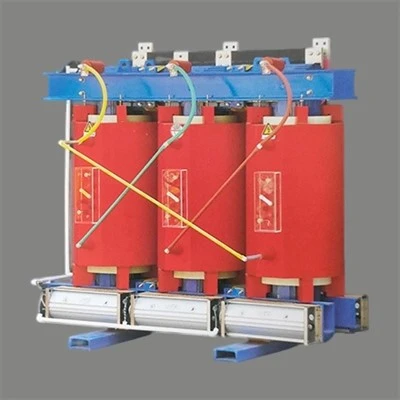
First off, let’s get one thing straight: compact substations aren’t your grandpa’s big, clunky substation that takes up half a parking lot. They’re pre-fabricated, skid-mounted units with all the switching, transformers, and gear packed into a weather-proof box (or sometimes two, depending on size) that we ship straight to your site. But just because they’re small doesn’t mean plugging ’em in is as easy as hooking up a laptop to a charger—there’s still a whole lot of red tape, engineering checks, and grid-specific hoops you gotta jump through before you even turn a single switch. I’ve seen teams show up on site with their CSS, already wired up, only to find out they didn’t confirm the grid’s voltage requirements and had to rework the entire unit. That’s a $10k+ mistake right there, and it’s totally avoidable.
Let’s start with the pre-connection phase, because this is where 90% of the problems happen. First step: touch base with your local utility early—like, before you even buy the CSS. I can’t stress this enough. I once had a client who waited till their unit was on a flatbed to call the utility, only to find out the local grid’s maximum allowable fault current was 12kA, but their CSS was rated for 16kA. The unit had to go back to the factory, which set their project back 3 weeks. The utility guys aren’t just there to send someone out to flip a switch—they’re gonna tell you what voltage they feed into your line (12kV? 25kV? 33kV depends on your area), what kind of metering they require (smart meters vs. old analog), and even where exactly your new CSS has to sit relative to their existing grid infrastructure (like, can’t put it 100 feet from their main line, has to be within 20 to avoid extra conductor costs). We usually tell all our clients to schedule this utility call within 24 hours of placing an order—don’t wait, utilities get swamped, and scheduling can take a week or two alone.
Next up, site prep. You can’t just drop a compact substation on grass and call it good. The site needs to be level (within 1 degree, per most utility specs), with a reinforced concrete pad or gravel base that can hold the unit’s weight—our 2MVA CSS is like 12,000 pounds, so a flimsy gravel base will shift, and that can mess up the internal wiring and alignment with the grid lines. Also, drainage is non-negotiable. I’ve seen units sit in a puddle after a rainstorm, and water gets into the cable glands—next thing you know, you’ve got a short and a day of downtime. We always recommend a 6-inch layer of crushed stone under the pad, with a slight slope away from the CSS box, to keep water moving. And don’t forget clearance! Utilities usually require 3 feet of space on all sides of the unit for maintenance, and 10 feet of clearance above for overhead lines. I had a client who parked a storage container 2 feet away from the CSS and couldn’t get the utility crew in to inspect it for a week—total headache.
Okay, now we’re at the actual physical connection step. This is where the rubber meets the road, and it’s something we train our clients’ techs on (or work hand-in-hand with their electricians) to do right. First, you gotta run the grid side cables to the CSS’s incoming terminals. Wait—hold on—are you using copper or aluminum cables? The utility will specify this, but aluminum is cheaper and more common for longer runs, while copper is better for tight, high-voltage spots. Also, cable sizing is critical. Too thin, and you get voltage drop; too thick, and you’re wasting money. We usually provide a cable sizing chart with every CSS, but if your electrician is winging it, that’s another way to mess up.
Once the cables are run, you terminate them properly. This is where a lot of rookie techs go wrong. You can’t just strip the insulation and crimp a connector—you gotta use torque wrenches to tighten the lugs to the exact spec, otherwise you get loose connections, which cause overheating and can lead to fires. I’ve worked on a project where a tech tightened a lug by hand, no torque wrench, and 6 months later, the connection melted, taking the whole commercial building’s power with it. Trust me, torque matters. Also, make sure all cable glands are properly sealed—we use IP67 glands on all our CSSs, but you still gotta check that there’s no gaps where water or dust can get in.
Now, the control and communication connections. Modern compact substations aren’t just a transformer in a box—they’ve got smart controls, remote monitoring, and fault protection systems that need to talk to the utility’s grid management system. This is where things get digital, and it’s easy to skip a step. You need to connect the communication cable (usually fiber optic or Ethernet) from the CSS’s RTU (Remote Terminal Unit) to the utility’s SCADA system. A lot of new teams forget to test this connection before energizing the unit, and then they have to bring a bucket truck back out to the site to run a new cable after the unit is powered up. We always tell clients to test the comms at least twice—once before connecting the grid, and once after the initial power-up.
Wait, before you even think about energizing, there’s a whole round of pre-energization tests. This is non-negotiable, and it’s something the utility will require before they sign off. First, insulation resistance testing—you use a megohmmeter to check that the cables and internal gear aren’t leaking current to ground. If that number is too low, something’s wrong with the wiring or insulation, and you can’t power on. Then there’s the phase rotation test—this makes sure the phases on the grid line match the phases on the CSS. If they’re reversed, you’ll power up the unit and blow the transformer, and that’s a $50k+ repair bill. I know a guy who skipped this test because he “knew the phases were right” and had to replace the transformer on a site that was supposed to open the next day—total disaster.
Once all the pre-tests pass, you coordinate with the utility to do a safety release. That means the utility will lock out their existing grid line (so no power is flowing from their side) while your team does the final checks, then they’ll come back and energize the line from their end. We always have a checklist we give our clients for this final step: confirm all tools are removed from the site, all personnel are clear of the unit, all grounding switches are open, and the utility’s lockout tag is properly placed. No cutting corners here—electrical work is dangerous, and I’ve seen too many near-misses where teams skipped safety steps.
Now, after the grid is connected, there’s a 72-hour monitoring period that the utility will require. That’s where the RTU data comes in—they track voltage, current, power factor, and any faults. We usually provide 24/7 access to our client’s monitoring portal for the first 90 days after installation, so they can check on things without bugging the utility every hour. Most issues that pop up after connection are small—like a loose connection that shows up as a voltage spike, or a minor comms glitch—but catching them fast saves everyone a lot of trouble later.
Look, I get it—this whole process sounds like a lot, and it can be overwhelming if you’re new to compact substations. That’s why our team doesn’t just sell you a unit and ghost you. We provide full on-site support for the connection process, a step-by-step guide tailored to your local utility’s rules, and even connect you with trusted electricians and utility coordinators in your area if you need a hand. A lot of other suppliers will just ship the unit and say “good luck,” but for us, your success is our success—if your CSS isn’t working right, we don’t make money.
Wait, let’s recap the key points so you don’t forget: 1) Talk to your utility before buying the CSS—don’t wait till it’s delivered. 2) Prep the site properly with level ground, drainage, and clearance. 3) Use torque wrenches for cable connections, no hand-tightening. 4) Do all pre-energization tests—insulation resistance, phase rotation, everything. 5) Coordinate safety with the utility before powering on. And 6) Use a supplier that’s actually done this a lot, not just someone who buys CSSs wholesale and resells them.

If you’re in the market for a compact substation, or you need help with a grid connection project that’s gone sideways, hit us up for a chat. We can walk through your specific site, check utility specs, and make sure you don’t end up with the same mistakes I’ve seen over the years. No pressure, no sales pitches—just real advice from someone who’s been in the game long enough to know what works and what doesn’t.
Electrical Distribution Equipment References
- International Electrotechnical Commission (IEC) 62271-200: High-voltage switchgear and controlgear – Part 200: AC metal-enclosed switchgear and controlgear for rated voltages above 1 kV and up to and including 52 kV
- Institute of Electrical and Electronics Engineers (IEEE) 1547: Standard for Interconnection and Interoperability of Distributed Energy Resources with Associated Electric Power Systems Interfaces
- North American Electric Reliability Corporation (NERC) Standard MOD-026: Reliability Standard for Distribution and Transmission Equipment Maintenance
- International Society of Automation (ISA) 95: Enterprise-Control System Integration Standards for Utility Substation Communications
Shijiazhuang Nuo’an Electric Power Equipment Co., Ltd.
As one of the most professional compact substation manufacturers and suppliers in China, we’re featured by quality products and good price. Please rest assured to buy advanced compact substation made in China here and get pricelist from our factory. Customized orders are welcome.
Address: NW Corner, Heping Rd & Xingsingsi St, North Baifo Village, Chang’an Dist, Shijiazhuang, Hebei, China
E-mail: nuoandianli3@163.com
WebSite: https://www.nuoanpower.com/
