Hey everyone, if you’ve ever worked on anything from a backyard bike build to a aerospace component, you’ve probably noticed titanium bolts popping up lately. I run a titanium bolt supply company, so I get asked this question all the time: “What’s the actual size range for these things?” It’s not a one-size-fits-all answer, and I’m here to break it down like I would to a mechanic who just needs to grab a bolt for a customer’s motorcycle, or a design engineer who’s spec-ing parts for a medical device. Let’s dive in. Titanium Bolt

First off, let’s be real—titanium bolts aren’t some special breed that only exists in lab drawings. We make and supply them for every industry you can think of, so their sizes span a pretty wide gamut. I’ll start with the tiny ones, because those are easy to overlook. If you’re into RC cars, watch repair, or even small robotics, you need bolts that barely peek out from a surface. Those tiny titanium bolts usually start at M1.6 or 1/16 inch, if you’re an imperial person. Wait, hold on—we supply both metric and imperial, right? Most of our customers mix and match, so I’ll cover both throughout. For reference, that M1.6 is just 1.6 millimeters in diameter, so it’s thinner than a standard pencil lead. The length here is usually super short too—like 2mm up to 6mm. Those are the ones you use to hold a watch’s back plate on, or fasten the small gears in a drone. I once got a random order for 1,000 M1.6 titanium bolts from a kid building a tiny underwater robot for a school science fair. That’s the stuff that makes this job fun.
Moving up a notch, the small-to-medium size bolts are where most of our day-to-day orders come from. For metric, that’s M2 up to M12, and imperial is 1/8 inch up to 1/2 inch in diameter. Length here jumps too—we’re talking 4mm all the way up to 150mm for metric, and 1/4 inch to 6 inches for imperial. These get used for so much: bicycle frames (you know, those fancy road bikes where every gram matters), automotive suspension parts, boat fittings, and even general machinery. A lot of mountain bike builders swear by M5 or M6 titanium bolts for stem and handlebar attachments because they’re strong and light, no rust on wet trails. I also sell a ton of M10 titanium bolts for truck bed racks—those need to hold up to heavy loads, salt, and whatever you throw in the back. This range is versatile, which is why it’s the sweet spot for a lot of our customers.
Now, don’t sleep on the larger titanium bolts. I see so many people think “titanium is only for small parts,” but no—big industries like construction, renewable energy (solar, wind), and heavy equipment use titanium bolts too. Metric here goes from M14 all the way up to M42, and imperial is 9/16 inch to 1 5/8 inch in diameter. Length? That can be pretty substantial—we regularly supply bolts up to 300mm (about 12 inches) for wind turbine blade mounting, and even longer ones for bridge infrastructure repairs. A few months back, we filled an order for 500 M24 titanium bolts that were 250mm long for a offshore wind farm project. Those are no joke—they have to handle extreme pressure, saltwater corrosion, and huge mechanical stress. Titanium’s strength-to-weight ratio is why these work better than steel here—same strength, way less weight, which makes installing and maintaining big structures so much easier.
Wait, let’s not forget the specialty sizes either. Sometimes customers come to us with a weird, non-standard size that they can’t find anywhere else. Maybe it’s for a custom racing car, a prototype medical implant device, or a vintage airplane restoration. We can make custom titanium bolts too, so if your size isn’t in the standard range, just hit us up. That said, there are limits—we don’t go smaller than M1.6 (1/16 inch) for most regular applications because those tiny bolts are too delicate to handle the torque needed, and we don’t usually go larger than M42 (1 5/8 inch) without a custom quote, since making really big titanium bolts requires special forging equipment.
Now, let’s talk about why the size range matters, because it’s not just about picking a bolt that fits a hole. Titanium bolts have different grades too, right? Grade 2 is pure titanium, soft and easy to machine, good for general use. Grade 5 (Ti-6Al-4V) is the workhorse—strong, corrosion-resistant, used for almost everything. Grade 9 is a step up, stronger than Grade 2, lighter than Grade 5, good for aerospace. The size might change depending on the grade you need. For example, Grade 2 bolts are common in the smaller sizes because they’re easy to thread, while Grade 5 is preferred for medium and large sizes where strength is key. If you’re using a 1/2 inch bolt for a bike, Grade 5 is a no-brainer, but a 1/8 inch bolt for a RC car might work in Grade 2 to save cost.
I’ve had so many customers mess this up before—they order a bolt that’s the right diameter and length, but the wrong grade, and it either breaks or costs more than it needs to. That’s why as a supplier, I always ask a few quick questions before they order: what’s it going on, what environment will it be in, and how much weight does it need to hold? Because that affects not just the grade, but the size too. A bolt holding a heavy solar panel on a rooftop needs to be a bigger diameter than one holding a small LED light.
Another thing: length is measured from the bottom of the head, right? Not from the top, that’s a common mistake. A lot of people order a 10mm bolt, but they mean 10mm from the top of the hex head, which will end up being too short once you thread it into a part. That’s why we always list the length as “threaded length” or “total length” on our product pages, so people don’t get confused. If you’re not sure, just send us a photo of the part you’re fastening, or tell us the thread pitch too—thread pitch is another thing that trips people up. Metric uses millimeters between threads, imperial uses threads per inch. For example, M6 x 1 means 6mm diameter, 1mm between threads; 1/4-20 means 1/4 inch diameter, 20 threads per inch. Mixing those up is a fast way to get a bolt that doesn’t fit.
Let me also clear up a myth I hear all the time: titanium bolts are only for fancy, high-end stuff. No, we supply tiny M2 titanium bolts for hobbyists, medium M8 bolts for home garage projects, and big M36 bolts for commercial construction. If you have a project that needs rust resistance, light weight, or high strength, titanium is a great option, regardless of size. I once helped a guy fix his old fishing boat—he was using steel bolts that kept rusting through on the transom, so we sent him a dozen M10 titanium bolts, and they’ve held up for three years now, no issues. That’s the kind of use case that doesn’t make the news, but it’s why we do what we do.
So to wrap up the size range, let’s recap: our standard titanium bolts go from M1.6 (1/16 inch) up to M42 (1 5/8 inch) in diameter, with lengths from 2mm (1/16 inch) all the way to 300mm (12 inches). Custom sizes outside of that are available on request, as long as they’re feasible with our equipment. The key is matching the size, grade, and thread type to your specific project—if you’re not sure, don’t guess. Reach out to us, and we can help you pick the right bolt for the job, no matter what it is.
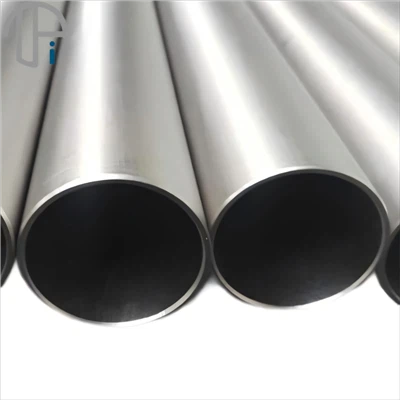
Whether you’re a mechanic building a custom motorcycle, an engineer designing a wind turbine, a hobbyist fixing a drone, or someone just needing a replacement bolt for a old grill, we’ve got you covered. Don’t waste time ordering the wrong size and waiting for a return—hit us up with your project details, and we’ll hook you up with the right titanium bolts at a fair price. We’re not here to sell you the biggest bolt, we’re here to sell you the one that works for what you need.
Seamless Titanium Tube References
- ASME B18.2.1: Square and Hex Bolts and Screws – Inch Series. American Society of Mechanical Engineers.
- ISO 898-1: Mechanical Properties of Fasteners Made of Carbon Steel and Alloy Steel – Part 1: Bolts, Screws and Studs for General Engineering. International Organization for Standardization.
- Titanium Fasteners Technical Guide. Titanium Industries, Inc.
- “Corrosion Resistance of Titanium Alloys.” NACE International Corrosion Handbook.
Baoji Top Titanium Industry Co., Ltd.
As one of the most professional titanium bolt manufacturers and suppliers in China, we’re featured by quality products and good price. Please rest assured to buy bulk titanium bolt in stock here and get quotation from our factory. Customized orders are welcome.
Address: No. 2, South Section Of Phoenix 2nd Road,High-Tech Zone, Baoji,Shaanxi, China (Mainland)
E-mail: sales@bjtopti.com
WebSite: https://www.china-topti.com/
