If you’ve ever worked with power distribution systems, you’ve probably encountered aluminum core cables—they’re a staple for residential, commercial, and industrial projects thanks to their lighter weight, lower material cost, and resistance to corrosion compared to other conductor metals. As a supplier of these cables, one of the most common questions I get from electricians, project managers, and installers is this: “Are there any limitations on how long I can run an aluminum core cable during installation?” Aluminum Core Cable

The short answer is yes, there are concrete, science-backed limitations to the length of an aluminum core cable installation, and these limitations aren’t arbitrary. They tie directly to electrical properties, material characteristics, and real-world installation constraints that anyone working with power needs to understand. Over the years, I’ve walked countless teams through these rules, helped troubleshoot projects that went wrong because someone ignored them, and refined how we communicate these limits to make installations smoother. Today, I want to break down what those limitations are, why they exist, and how you can account for them during your next job.
First, let’s ground this in basic electrical engineering: every cable has resistance, and resistance generates voltage drop. That’s the loss of electrical energy as current travels through the conductor, right? For aluminum, which has a higher resistivity than copper—about 2.82 × 10⁻⁸ ohm-meters at 20°C, compared to copper’s 1.68 × 10⁻⁸ ohm-meters—resistance is inherently higher for a given cable size. That means voltage drop is a bigger concern for aluminum core cables than it would be for copper.
The National Electrical Code (NEC), which is the gold standard for electrical installation in the U.S., sets a maximum allowable voltage drop of 3% for branch circuits (the lines that power outlets, lights, and small appliances) and 5% for feeder circuits (the lines that carry power from the main panel to subpanels). If you run a cable too long, that voltage drop can exceed these limits, causing a host of problems: lights dimming when high-power appliances kick on, motors overheating because they’re not getting enough voltage, and even shortened lifespans for connected equipment. For example, a 12 AWG aluminum cable used for a 15-amp circuit—one of the most common for residential outlets—will have a voltage drop of about 2.5 volts per 100 feet. That means if you run it 150 feet, you’re at 3.75 volts drop, which already exceeds the NEC’s 3% limit for a 120-volt circuit (3% of 120 is 3.6 volts). Run it 200 feet, and you’re at 5 volts, more than double the allowed drop.
That’s a straightforward example, but length limitations shift depending on several factors, not just cable size. The amount of current you’re carrying matters too. A 10 AWG aluminum cable, which can handle 30 amps, will have a lower voltage drop per foot than a smaller gauge, so it can run longer before hitting that 3% limit. A 10 AWG 30-amp cable drops about 1.5 volts per 100 feet, so it can go 240 feet before hitting 3.6 volts—way farther than the 12 AWG cable. On the flip side, a larger feeder cable, say 2/0 AWG aluminum, can handle 150 amps, and with a much lower voltage drop per foot, it’s feasible to run it 500 feet or more as long as you don’t exceed the 5% feeder limit.
Wait, but what about low-voltage applications? Like solar panel arrays, security systems, or landscape lighting? Those have their own length limits, too. Low-voltage systems typically run at 12, 24, or 48 volts, so even a small voltage drop translates to a huge percentage of the total voltage. For example, a 12-volt landscape light system uses a small aluminum cable to run power to multiple fixtures. If you run that cable 50 feet, the voltage drop can be 1 or 2 volts, which is 8-16% of the total 12 volts—way above what the lights need to work properly. In these cases, installers often use larger gauge aluminum or even copper-clad aluminum (a mix that balances aluminum’s cost with better conductivity) to stretch the run, but even then, there’s a hard length cap. I’ve seen landscape projects fail because someone tried to run 100 feet of 18 AWG aluminum for 12-volt fixtures—half the lights were dim, and the others didn’t turn on at all. That’s a preventable mistake if you understand the length limit tied to voltage.
Another key limitation is thermal expansion and contraction of aluminum. Unlike copper, which expands and contracts less with temperature changes, aluminum has a higher coefficient of thermal expansion—about 23.1 × 10⁻⁶ per °C, compared to copper’s 16.8 × 10⁻⁶ per °C. What does that mean for installation? If you run a long cable in a hot environment—like an attic, where temperatures can swing 50°F from summer to winter—the aluminum will expand when it’s hot and contract when it cools. If you install the cable too tightly without any slack, that repeated movement can put stress on the termination points, the connections where the cable meets a panel or fixture. Over time, that stress can loosen the connections, cause arcing, or even break the conductor entirely.
This is especially important for long runs in exterior installations, like overhead power lines or underground feeder cables. For example, a 1,000-foot overhead aluminum cable strung between two poles needs enough sag to account for thermal expansion. If you pull it too tight during installation, in the summer heat, the cable will stretch, and in the winter cold, it might contract so much that it snaps. We’ve had installers come to us after a job where they didn’t account for this, and the cable failed within a year—costing them time, money, and a frustrated client. We always remind teams that for runs over 500 feet, you should add 1-2% extra slack to accommodate temperature changes, which effectively sets a practical length limit for installations where tight tension is a risk.
Then there’s the issue of ampacity— the maximum current a cable can carry without overheating. The longer the cable, the more resistance it has, which generates more heat. That means a longer run might have a lower effective ampacity than a shorter run of the same cable size. Wait, that’s a point people often miss! Ampacity ratings in cable data sheets are for a specific length, usually 100 feet. For runs longer than that, you have to derate the ampacity to account for the extra heat from higher resistance. For example, a 4 AWG aluminum cable has an ampacity of 85 amps at 100 feet, but at 500 feet, the increased resistance means it can only safely carry around 75 amps. If you design a circuit to pull 80 amps on a 500-foot run, the cable will overheat, posing a fire risk. That’s another way length limits play into installation—you can’t just use the standard ampacity for long runs; you have to adjust, which might require a larger cable than you’d use for a shorter distance.
Are there any exceptions where these length limits don’t apply? In some cases, yes, but they’re specific. High-voltage direct current (HVDC) transmission lines, for example, run at thousands of volts, so voltage drop as a percentage of total power is tiny, and they can run hundreds of miles. But those are utility-scale transmission systems, not the residential or commercial installations most of our customers work on. On the smaller side, some low-current control circuits, like those for thermostats or small sensors, have very low power draws, so a longer run might not cause noticeable voltage drop. But even there, we recommend keeping runs under 50 feet to avoid signal interference, which is a whole other issue.
So how do you calculate the maximum length for your specific installation? It’s not as hard as it sounds. The NEC has voltage drop calculators, and most cable manufacturers (including us, for our aluminum core cables) provide free, easy-to-use tools on our website that let you input your circuit type, voltage, current, and cable size, and it will tell you the maximum recommended length. I always tell installers not to guess here—even if you’ve run copper cables before, aluminum’s higher resistivity means the numbers are different. For example, a 100-foot run of 14 AWG copper for a 120-volt circuit is fine, but 100 feet of 14 AWG aluminum is almost at the 3% voltage drop limit. If you’re working with aluminum, double-check your numbers.
Now, I want to be clear: these limitations aren’t designed to make your job harder. They’re based on decades of testing and real-world experience to keep installations safe and reliable. As a supplier, our job isn’t just to sell you cable—it’s to make sure you can use it correctly. That’s why we provide technical support to every customer, from small residential electricians to large commercial contractors, to help them figure out the right cable size and length for their project.
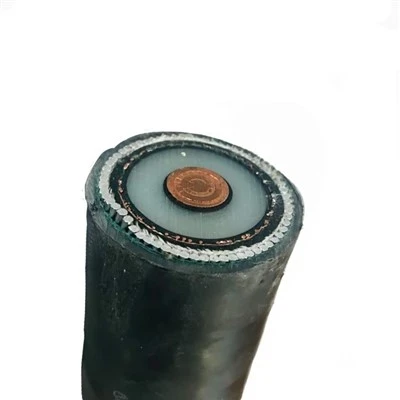
If you’re planning an installation and want to make sure you’re staying within the proper length limits, or if you’re having trouble troubleshooting a run that’s not working as expected, don’t hesitate to reach out. We’re here to help you get the job done right, safely, and on time.
Copper Core Cable References:
National Electrical Code (NEC), Article 210 (Branch Circuits) and Article 215 (Feeder Circuits)
Aluminum Cable Thermal Expansion Coefficient Data, Aluminum Association
Electrical Resistance and Voltage Drop Calculations for Power Cables, IEEE Transactions on Power Delivery, Vol. 34, No. 2, 2019
Hebei Fengbo Electrical Equipment Co., Ltd.
As one of the most professional aluminum core cable manufacturers and suppliers in China, we warmly welcome you to wholesale durable aluminum core cable for sale here and get quotation from our factory. All custom made cables are with high quality and competitive price. Also, OEM service is available.
Address: No.100 meters south, East Ring Road & Wei’er Road intersection, Huang’erying East Village, Jiajiakou Town, Ningjin County, Xingtai City, Hebei Province, China
E-mail: fonbocable@gmail.com
WebSite: https://www.fonbocable.com/
