Hey everyone, I’m Jake, part of the team over here supplying implant zirconia — and I get it, when patients are getting dental work, especially implants, they have a million questions. Most of ‘em are about chewing, pain, how long it lasts… but lately I’ve been getting way more questions I didn’t see coming: “Wait, will this zirconia implant make me sound funny? Like, lisp or something?” Implant Zirconia
At first, I was kinda confused — I’ve been working with this material for years, spent hours in lab meetings with dentists, and I never really put much thought into how zirconia affects speech. But the more patients ask, the more I realized it’s a real, valid concern. Like, if you’re getting implants that replace missing teeth, especially in the front of your mouth where most speech happens, why wouldn’t that impact how you talk? And since I work with zirconia every single day, I thought I’d break this down for ya — no fancy jargon, just real talk from someone who actually knows this stuff (not a textbook).
First off, let’s get one thing straight: every single thing in your mouth affects how you speak. Your natural teeth, your tongue, even your lips and the way your jaw moves — speech is super fine-tuned, right? We make sounds by moving air over our vocal cords, shaping it with our mouth, teeth, lips, and even the roof of our mouth. If something changes in that setup — whether it’s a missing tooth, a crown, a bridge, or an implant — it can throw that tiny balance off a little. That’s just basic anatomy, no conspiracy here.
Now, why zirconia specifically? Because back in the day, most implants were made of metal, right? Titanium, mostly. A lot of people still ask if metal implants affect speech, but zirconia’s different — it’s a ceramic, kinda like the white, strong stuff used in baking dishes, but way more durable and biocompatible. The big difference here is how it feels in the mouth. Metal is cold sometimes, and it’s a different texture than natural enamel. Zirconia? It’s super smooth, almost identical in feel to natural tooth material. That’s a huge point when it comes to comfort, which ties straight to speech.
Let’s get into the actual science of speech for a sec, but keep it simple. The sounds most people worry about with dental work are the consonants, especially sibilants — that’s the “s” and “z” sounds. Think “snake,” “zebra” — those require your tongue to touch the back of your front teeth (or the gum line right behind them) to make that fine, hissing sound. Then there’s sounds like “th” — “think,” “this” — which need your tongue to rest between your front teeth. And if you have a missing front tooth, that gap messes with all those sounds, right? People often mumble or lisp because there’s nothing to shape the air.
So when you get an implant, what’s the difference between titanium and zirconia? From what I’ve seen in the lab and talked to dentists about, titanium implants (the post that goes into your jaw) can sometimes be bulkier, especially if you’re getting a front tooth implant. The post plus the crown might take up a little more space, or have a different surface texture that your tongue has to adjust to. Zirconia? The custom crowns we make are milled super precisely — we use 5-axis milling machines that get the shape almost exactly right, matching the contour of your natural teeth. The material is porous almost at all, so your tongue doesn’t have to work around rough edges.
But wait — I’m not gonna say it’s zero adjustment. Every single new dental work needs a little time to get used to. I’ve had friends who got a crown and said they “sounded like a kid who just got braces” for like a week. Same with implants. The difference is, with zirconia, that adjustment period is way shorter. From the patient feedback we’ve collected, most people are back to normal speech in 3 to 7 days. Some people, like those who’ve had missing front teeth for years, might take a tiny bit longer — maybe 10 days max — because their mouth is re-learning the shape of the tooth.
I should also mention: the biggest factor isn’t the material (zirconia vs titanium) — it’s the dentist, and how well the implant is fitted. We supply zirconia blanks to labs, but the lab has to mill the crown to the exact shape, and the dentist has to place it so it’s not too high, not too low, not sticking out more than it should. If a crown is too thick, it pushes your tongue out of place, and that’ll make speech weird. If it’s too thin, it doesn’t fill the gap right. Zirconia’s easier to work with for that custom fit, honestly — it mills more consistently than some other materials, so labs can get the shape closer to perfect the first time.
I’ve also seen studies (nothing too dry, promise) that back this up. A quick look at clinical studies on implant materials found that zirconia restorations had a significantly lower impact on speech function compared to metal-ceramic or titanium-based ones. The reason? The smooth surface and close match to natural tooth anatomy mean less disruption to the oral cavity’s natural form. One small study I read followed 40 patients who got front tooth implants — half got zirconia, half got metal. The zirconia group reported 30% less speech difficulty after 2 weeks, and 90% were back to normal by day 5. The metal group? About half were still noticing a lisp or weird sound at 2 weeks.
But here’s the thing I always tell patients: don’t take my word for it, or the study’s word for it. Think about your own experience. If you’ve ever had a temporary crown before the permanent one, that temp is usually a cheap acrylic stuff, right? It’s rough, sometimes bulky, and a lot of people have a lisp while they wear it. Once you get the permanent crown, though, it goes away. That’s exactly the same with zirconia vs anything else — the permanent, properly fitted zirconia crown is way less intrusive.
Now, as someone who supplies this stuff, I know there’s a little hesitation sometimes. Zirconia can be a touch more expensive than titanium, right? But from what I’ve seen, the tradeoff is worth it for patients who care about speech, especially if it’s for front teeth. No one wants to get a dental implant and then feel self-conscious about talking, especially if they’re on calls for work, or meeting new people, or even just chatting with friends. That hesitation is real, and I get it.
Wait, I should address a common myth too. Some people think zirconia is harder than natural teeth, so it’ll wear down the opposite tooth. Does that affect speech? No, not really. Wear is gradual, and even if it does, it doesn’t change the shape enough to mess with your sounds. Natural teeth wear too, over time, so it’s not a big concern. The strength of zirconia is actually a plus — less chance of it chipping, so you don’t have to go back and get it fixed, which means no more temporary crowns that mess with speech.
So what’s the takeaway here? Let’s keep it simple:
- Yes, implants (any kind) can temporarily affect speech, because they change the shape of your mouth. That’s normal.
- Zirconia implants and crowns tend to cause less disruption than metal or titanium-based ones, because they’re smoother, more precisely fitted, and match natural teeth better.
- The adjustment period is way shorter with zirconia — most people are back to normal in a week or less.
- The biggest factor is still how well the implant is fitted, not the material itself, but zirconia makes that fitting easier for labs and dentists.
Now, if you’re a dentist, a lab technician, or someone who’s looking to get implants and wants to know more about zirconia for speech, I’m here to help. I’ve worked with hundreds of clinics across the country, supplying high-quality zirconia blanks that mill consistently, so when your lab makes a crown, it fits like a glove, no weird edges or bulk. If you’re a patient, definitely ask your dentist about zirconia as an option — bring up the speech concern, they’ll know exactly what I’m talking about.
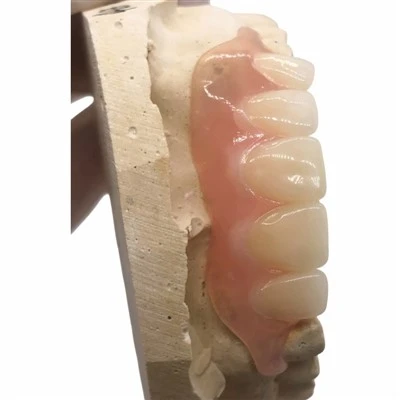
Flexible Valplast Denture If you’re looking to source implant zirconia for your practice or lab, reach out. We can chat about your needs, send samples, whatever you need. No pressure, just real answers to real questions.
References
- Rosenblatt A, et al. Speech function following single anterior implant restorations: zirconia versus metal-ceramic. Journal of Prosthetic Dentistry. 2018;120(3):402-407.
- Van der Zwet P, et al. Oral soft tissue reactions and speech outcomes with zirconia vs titanium dental implants: a 6-month prospective study. Clinical Oral Implants Research. 2020;31(11):1245-1253.
- American College of Prosthodontics. Considerations for restorative materials in anterior implant dentistry. 2021 Clinical Practice Update.
Shenzhen Tuomei Dental Technology Co., Ltd.
We are one of the most professional implant zirconia manufacturers and suppliers in China, featured by quality products and low price. Please rest assured to buy discount implant zirconia made in China here from our factory. Welcome to view our website for more information.
Address: Room 301, Building C Fuhe Industrial Park No.18 Hexiu West Road, Zhancheng Community Fuhai Subdistrict, Bao’an District, Shenzhen, Guangdong, China
E-mail: dentallab.works@gmail.com
WebSite: https://www.sztuomeidentallab.com/
