If you’ve ever walked into a coffee shop on a rainy day and breathed in air that feels cool, fresh, and free of that damp, stuffy smell that lingers in enclosed spaces—or stepped into a manufacturing plant where the air doesn’t sting your eyes or clog your lungs while you watch heavy machinery hum along—you’ve experienced the quiet work of air treatment equipment. For the last 12 years, I’ve been supplying this equipment to businesses and residential spaces alike, and what I’ve learned is that these systems aren’t just fancy gadgets. They’re workhorses with specific, science-backed functions that touch nearly every part of daily life, from keeping a small family home healthy to keeping a 500-person factory running smoothly. Too often, people write them off as an unnecessary add-on—until they notice a problem: a kid’s persistent asthma flares up, a production line’s delicate parts get ruined by dust, or a warehouse’s humidity turns pallets of goods into moldy garbage. That’s when they realize air treatment isn’t a luxury. It’s a core part of how we live and work safely. Air Treatment Equipment
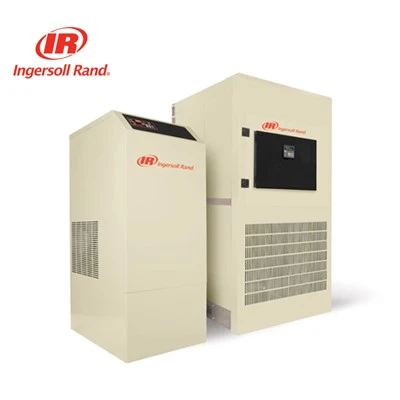
Let’s start with the most obvious (and most critical) function: improving indoor air quality (IAQ) for human health. If you’re like most people, you spend 90% of your time indoors, whether that’s an office, home, or school. The air inside those spaces can be 2 to 5 times more polluted than outdoor air, according to the EPA. Where does that pollution come from? Volatile Organic Compounds (VOCs) from paint, cleaning supplies, furniture, and plastic packaging; particulate matter (PM2.5 and PM10) from dust, pet dander, pollen, and even wildfire smoke that drifts through windows; mold spores that grow in damp corners; and biological contaminants like bacteria and viruses that circulate through ventilation systems.
Air treatment equipment targets all of these. For example, the HEPA filters I supply for residential and office spaces capture 99.97% of particles as small as 0.3 microns— that’s smaller than a grain of flour, and just the right size to trigger allergy or asthma symptoms. For a family with a child who has eczema linked to dust mites, these filters can cut flare-ups by 40% per a 2022 study in the Journal of Allergy and Clinical Immunology: In Practice. For commercial spaces like daycares or hospitals, we pair HEPA filters with activated carbon media that absorbs VOCs from new carpet glue or cleaning chemicals, and UV-C light modules that break down 99.9% of airborne bacteria and viruses, including influenza and COVID-19 variants. It’s not just about “clean” air—it’s about air that doesn’t make you sick. I’ve heard from a daycare owner in Chicago who installed our system after three staff members called out sick with flu in a single week; by the next month, absenteeism dropped to zero related to airborne germs. That’s the kind of impact these systems have that you can’t see until it happens.
Next, protecting assets and equipment—this is where a lot of industrial customers first come to us. If you work in manufacturing, warehousing, electronics, pharmaceuticals, or even art preservation, the air around your products and machinery is often the biggest silent threat. Let’s take electronics manufacturing, for example. A single particle of dust as small as 0.5 microns can get into a microchip during assembly, causing a short circuit that ruins an entire batch of $10,000 worth of parts. A pharmaceutical company making injectable medications can’t afford any airborne contamination, because even a tiny mold spore can ruin an entire batch of drugs meant for patients. That’s why we supply precision air treatment systems for cleanrooms that maintain particulate levels lower than 1 particle per cubic meter—levels so strict that they’re only used for things like semiconductors or life-saving vaccines.
Even non-manufacturing assets need this. I recently worked with a small historic library in Boston that had 100-year-old parchment maps and oil paintings fading because high humidity was causing mold to grow and pigments to break down. Their original HVAC system was just heating and cooling air, not treating its moisture content. We installed dehumidifiers with precise humidity controls that keep the library’s air at a steady 45% relative humidity—exactly the level recommended by the American Library Association to preserve paper and artwork for centuries. Within six months, they reported no new mold growth and a noticeable reduction in the musty smell that had bothered visitors for years. For businesses, air treatment isn’t just about protecting products—it’s about protecting profits and legacy. I’ve had warehouse customers tell me that our humidity control systems saved them $20,000 in a single winter by preventing pallets of imported leather goods from getting moldy. That’s a return on investment they see every month, not just a vague “health benefit.”
Then there’s maintaining comfort and energy efficiency, a function that’s often overlooked but makes a huge difference in both residential and commercial spaces. Think about it: comfort isn’t just about temperature. If the air is too humid, it feels sticky in summer, even if the AC is running at 68°F. If it’s too dry, your skin gets chapped, your nose bleeds, and static electricity shocks you every time you touch a doorknob. Air treatment systems control humidity—adding moisture with humidifiers in dry climates, removing it with dehumidifiers in humid ones—to keep that “just right” feeling. But here’s the bonus: when humidity is at the optimal level (30-50% for most spaces), your HVAC system doesn’t have to work as hard to heat or cool the air. A 2021 study from the Department of Energy found that properly humidity-controlled homes use 10-15% less energy for heating and cooling than homes with unregulated moisture levels. That’s lower utility bills for homeowners, and lower operational costs for office building managers. I had a residential customer in Arizona tell me that after installing our whole-home dehumidifier, her AC bill dropped by $70 a month in peak summer—enough to pay for the system in under two years. It’s a win that people don’t expect until they see the numbers.
Wait, let’s not forget air purification for specific industrial processes too. For example, in food and beverage manufacturing, you need to remove food odors and volatile compounds that could ruin the taste of products like wine or craft beer. We supply activated carbon filters for a winery in Oregon that used to have complaints from neighboring residents about the smell of fermentation; now, those odors are almost completely eliminated, and they even report that the air in their tasting room smells fresh, not like the fermentation vats in the back. In metal fabrication, we supply fume extractors that capture toxic welding fumes and metal dust before they can be released into the air, protecting workers from lung damage and complying with OSHA safety regulations. I can’t stress enough how important that compliance is—too many small businesses think they can skip air treatment to save money, only to get hit with OSHA fines that are way more expensive than the equipment itself. Last year, I helped a small welding shop in Detroit upgrade their fume extraction system; before, they were operating without any ventilation and had had three workers diagnosed with occupational asthma. After the upgrade, they passed their OSHA inspection on the first try, and their workers’ symptoms improved within three months. That’s not just a function of air treatment—it’s a matter of doing right by employees.
Of course, there are different types of air treatment equipment for every need, which is why I work with customers one-on-one to find the right solution, not just sell a generic system. For residential spaces, that might be a portable HEPA air purifier for a bedroom, or a whole-home system that works with your existing HVAC. For small offices, it could be a UV-C air cleaner to reduce sick days. For large manufacturing facilities, it’s custom-engineered systems with high-flow filters, dehumidifiers, and fume extractors sized to handle thousands of cubic feet of air per minute. The key is that air treatment isn’t one-size-fits-all, and that’s something I make sure every customer understands—even if it means spending an extra hour talking through their specific problem instead of just pushing a product.
I’ve been in this industry long enough to see trends come and go, but the core functions of air treatment have stayed the same: protecting health, preserving assets, keeping spaces comfortable, and supporting safe, compliant operations. What has changed is that more people are starting to see it for what it is—not a nice-to-have, but an essential part of any space. Whether you’re a parent tired of your kid’s allergy symptoms, a business owner tired of ruining products, or a homeowner looking to lower utility bills, air treatment equipment is the quiet solution that makes a big difference.

If you’ve noticed stuffy air in your home, have concerns about air quality in your workplace, or need a system to protect your products or equipment, I’m here to help. I work with customers across residential, commercial, and industrial sectors, and I can walk you through your options, no sales pressure, no fine print. Reach out to talk through what you need, and we can find the right air treatment solution for your space.
Air Compressor Parts References
U.S. Environmental Protection Agency. (n.d.). Indoor Air Quality Basics. Retrieved from relevant EPA resources
Journal of Allergy and Clinical Immunology: In Practice. (2022). HEPA Filtration and Pediatric Asthma Symptoms: A Meta-Analysis.
U.S. Department of Energy. (2021). Humidity Control and Energy Efficiency in Residential Buildings.
American Library Association. (2020). Environmental Guidelines for the Storage of Library Materials.
Occupational Safety and Health Administration. (2023). Respiratory Protection Standards for Industrial Workers.
Suzhou Ruiqi Intelligent Equipment Co., Ltd.
As one of the most professional air treatment equipment manufacturers and suppliers in China, we also support custom service. As we have world-leading production equipment and strong manufacturing capabilities, we warmly welcome you to buy high quality air treatment equipment made in China here from our factory. Contact us for pricelist.
Address: No. 1729, Zhongshan South Road, Wujiang District, Suzhou City, Jiangsu Province, China, 16th Floor
E-mail: wts476626494@126.com
WebSite: https://www.ruiqicomp.com/
