Hey there, Patrol Boats

If you’ve ever worked with patrol boats, you know tropical climates aren’t just “a bit hot” – they’re a whole different beast. As someone who’s been in this game long enough to field 100+ questions from operators sweating through their uniforms mid-patrol, let me break down what actually goes into keeping these boats running when the humidity’s hitting 90% and the monsoons are rolling in. No stuffy manuals, just real talk from a supplier who’s built boats for places like the Florida Keys, the Caribbean, and parts of Southeast Asia where the sun doesn’t cut you any slack.
First off, let’s cut to the big one: heat and corrosion. If you think saltwater + humidity is just “wet,” wait till you see what it does to unprotected metal. Last year, I got a call from a coast guard unit in Belize whose patrol boat’s prop shaft seized up after three months of not seeing a dry dock. Turned out their old gear didn’t have proper sacrificial anodes – those little metal bits that corrode instead of the actual shaft. We’ve since revised every boat we ship to tropical zones with extra zinc anodes, plus a galvanic barrier between the shaft and the gear casing. But it’s not just metal. The electronics? GPS units, radios, depth finders – they hate high temps. Leave a screen on the dash in 100°F heat, and by the afternoon, it’s glitching so bad you can’t tell your position from a coffee stain. So we seal all our electronic panels with a high-temperature, waterproof silicone gaskets, and we route wiring through insulated conduits that don’t turn into fire hazards when the sun’s beating down. No shortcuts here – a $5 gasket can save you a $10k radio and a whole day of lost patrol time.
Next, engine performance when the air’s thick. Tropical air is less dense, right? Because warm air expands, which means less oxygen gets to the engine. A standard patrol engine built for temperate climates will lose 15-20% of its power in 85°F heat, and that’s a huge deal when you’re chasing a smuggling vessel or responding to a distress call in rough seas. We don’t just slap a standard engine on our tropical models – we tune them for higher air flow. Larger intercoolers, modified turbochargers, and sometimes even a secondary air intake that pulls in cooler air from below deck instead of the sweltering cabin. Last month, a client in Panama tested one of our new 38-foot patrol boats: in 92°F heat, it hit 38 knots, same as it did in the 65°F test tank back at our yard. That’s the kind of performance that matters when every minute counts. We also add extra cooling capacity – bigger radiators, heat exchangers that are sized for constant high-load operation. No more overheating mid-chase. Trust me, I’ve seen a boat stall halfway through a rescue because the engine temp spiked. Not cool.
Then there’s the hull and handling in choppy tropical waters. Tropical areas don’t just have calm blue days – they have sudden squalls, reef-strewn coastlines, and swells that come out of nowhere. We build our tropical patrol boats with a deeper V-hull than standard models – not too deep to slow them down, but deep enough to cut through 8-foot swells without slamming so hard the crew gets concussed. (Slam damage is real – broken windows, loose equipment, even crew injuries. We’ve lost count of clients who switched to our hull design after dents in their old boats cracked the fuel tank.) We also use a special anti-fouling paint that’s made for warm water. Standard anti-fouling works in 60°F water, but in 80°F, barnacles and algae grow twice as fast. Those little buggers add drag, kill speed, and eat away at the hull over time. Our paint is copper-based but not so harsh it kills marine life (important for areas like the Great Barrier Reef), and it lasts 18 months vs. 6 months for regular paint. That means less time in dry dock, more time on patrol. I’ve had a captain in the Dominican Republic tell me his old boat needed a paint job every 6 months – now he goes 18, which saves his unit $20k a year. Hard to argue with that.
Crew comfort isn’t a “nice-to-have” – it’s part of operational efficiency. If a sailor is dying of heat exhaustion halfway through an 8-hour patrol, they’re not paying attention. They’re wiping sweat out of their eyes, not scanning the horizon for a suspicious vessel. So we add practical, no-fuss cooling systems. We don’t waste space on fancy AC that guzzles fuel, but we do install overhead exhaust fans that pull hot air out of the cabin, plus insulated ceiling panels that keep the interior 10-15°F cooler than the outside. We also use non-slip, breathable flooring – no moldy rubber mats that get slick when they’re wet and hot. And we add small, easy-access storage for water bottles and electrolyte packs – because a hydrated crew is an alert crew. Last year, a marine unit in Hawaii told us their patrols used to have one crew member skip patrol every other day from heat-related fatigue. Since switching to our boats, that number’s zero. That’s a huge win for their operational readiness.
Now, let’s talk maintenance – because even the best tropical patrol boat isn’t set it and forget it. Operators in tropical areas can’t do the same monthly checks they do in cooler climates. We’ve created a simplified maintenance checklist tailored specifically for these conditions. Things like: checking anode levels every 2 weeks (not every month), flushing the engine with fresh water after every saltwater use (salt crystals build up in cooling systems fast), and spraying down electrical connections with dielectric grease to prevent corrosion. We also include a free 2-hour training session with every boat we sell – we don’t just hand over the keys and dip. We walk the crew through what to look for, how to spot early corrosion before it becomes a problem, and simple fixes they can do on the water without calling a mechanic. Last month, a captain in Trinidad hit a piece of debris that knocked a small hole in his hull. The crew used the epoxy kit we included and got back to base in 2 hours, instead of waiting 3 days for a repair boat. That’s the kind of on-the-ground support you don’t get from big, corporate suppliers who just care about selling the boat, not keeping it running.
I know a lot of operators out there have had bad experiences: boats that fall apart in the first year, suppliers that ghost them when something breaks, parts that take 2 weeks to ship to a remote tropical base. We don’t do that. We stock parts in warehouses in Miami and Singapore, so if a unit in the Maldives needs a replacement impeller, it gets there in 3 days, not 2 weeks. And we’re always available – I get texts at 10pm from captains asking, “Why is my radio cutting out?” and I don’t make them wait till morning. This isn’t a corporate office for us – we’re ex-patrol boat mechanics, former coast guard crew, guys who’ve spent more time on these boats than in an office. We get what you go through.
At the end of the day, tropical climates demand boats that work as hard as the crews operating them. No fancy gimmicks, no overpriced parts, just solid engineering built for heat, salt, and rough waters. If you’re tired of dealing with boats that can’t keep up when the pressure’s on, let’s chat. Whether you’re outfitting a small coastal unit or a larger national coast guard, we can tailor a boat to your needs, not a one-size-fits-all model.
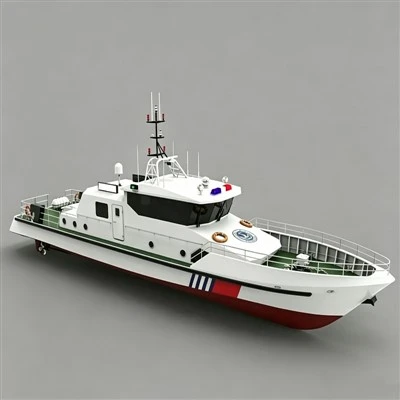
So reach out whenever – we’re here to help your crews stay safe, your patrols stay on schedule, and your boats keep running, even when the sun is blazing.
Landing Craft References
- National Oceanic and Atmospheric Administration (NOAA). "Impacts of High Temperatures on Marine Engine Performance." 2022.
- International Maritime Organization (IMO). "Guidelines for Corrosion Prevention in Tropical Marine Environments." 2021.
- U.S. Coast Guard. "Operational Challenges of Patrol Vessels in Tropical Climates." 2023.
- Marine Surface Coatings Association (MSCA). "Anti-Fouling Paint Performance in Warm Marine Waters." 2022.
Longkou Jinda Shipping Co., Ltd.
As one of the most professional patrol boats manufacturers and suppliers in China, our products have good reputation in the market. Please feel free to buy premium patrol boats for sale here from our factory. Welcome to contact us for customized service.
Address: North of Shuangyu Village, Xingjia Sub-district, Longkou City, Yantai City, Shandong Province
E-mail: leven@jindaship.com
WebSite: https://www.jinda-ship.com/
